Vol-10 Number- 4 October 2025 Chief Editor: Vijay Kumar Publisher: National Trust for Promotion of Knowledge, Lucknow Mode of Publication: Online (e-Journal)
1. Haplogroups of different Castes, Tribes and ethnic groups of India
Author: Niraj rai
This article by Niraj rai gives the Y-haplogroup percentages of 176 Castes, Tribes and ethnic groups
of India. The list of groups includes 16 Castes/Tribes of Andhra Pradesh, 2 Castes/Tribes of
Arunachal Pradesh, 9 Castes/Tribes of Bihar, 8 Castes/Tribes of Chattisgarh, 5 Castes/Tribes of
Gujarat, 1 Caste of Himachal Pradesh, 15 Castes/Tribes of Jharkhand, 11 Castes/Tribes of Karnataka,
8 Castes/Tribes of Kerala, 7 Castes/Tribes of Madhya Pradesh, 14 Castes/Tribes of Maharashtra, 2
Castes/Tribes of Meghalaya, 7 Castes/Tribes of of Mizoram, 12 Castes/Tribes of Orissa, 1 Caste of
Punjab, 2 Caste/ethnic group of Sri lanka, 21 Castes/Tribes of Tamil Nadu, 4 Castes/Tribes of
Tripura, 15 Castes/Tribes of Uttar Pradesh, 16 Castes/Tribes of West Bengal and pan Indian
percentages of 3 Castes.
2. Preliminary Report on the Excavation of the Early Historical Site Barpali Asurgarh, Odisha
Author: Dr. Atula Kumar Pradhan, Dr. Umakanta Mishra, Dr. Santosh Kumar Mallik, Dr. Paramatap Pradhan and Chudamani Rana
This article by Dr. Atula Kumar Pradhan, Dr. Umakanta Mishra, Dr. Santosh Kumar Mallik, Dr.
Paramatap Pradhan and Chudamani Rana is the preliminary report of early historical sites Barpali
Asurgarh, district Bargarh, Odisha. The geographic factors, combined with contemporary social and
cultural changes, led to the establishment of fortified settlements that represented the height of early
urban development in the region. Asurgarh archaeological complex, is located in the Barpali
administrative area of Bargarh district. The site features a double-moated and double-fortified mud
fort, showcasing sophisticated early urban defensive design. The stratigraphy of excavation shows
three phases. Period I corresponds with Early Historic period and shows remarkable growth in
material culture, linked to the early historical phase. Period II corresponds to the Early Medieval
period and is tentatively associated with the Somavamsi– Kalachuri culture. Period III is associated
with Late Medieval and shows signs of cultural decline and lower population levels. The
archaeological evidence points to a gradual abandonment of the area, possibly caused by military
actions from the Satavahana or Early Gupta kingdoms, or perhaps by environmental changes that
made settlement difficult.
3. Seals, Sealings, Moulds, Ring and Jewellery moulds kept in the Collection of Aditya Agarwal, Prayagraj U.P.
Author: Prashant Srivastva & Shamoon Ahmad
This article by Vijay Kumar, Alok Ranjan and Aditya Kumar Agarwal is the catalogue of 1 bronze
sealing, 14 bronze seals, 16 bronze rings, 3 bronze objects, 69 terracotta seals and sealing, 25 stamps,
12 moulds and 40 jewellery moulds kept in the collection of Aditya Kumar Agarwal, Prayagraj -
Uttar Pradesh. These have mainly been collected from Kaushambi and surrounding areas. This
catalogue is important because it presents a large number of jewellery moulds made of terracotta as
well as soapstone. The moulds indicates that jewellery was cast in pieces and later on, it was welded
to form the complete piece. There is only one bronze royal sealing belonging to “Navika” the king
of Kaushambi dateable to 1st – 2nd Century AD. It appears that the Greeks living in North-Western
India had regular contacts with the kingdom of Kaushambi.
4. Typo-Technological analysis of Pottery of Sundar River Valley, Odisha
Author: Kshyeera Sagara Rana
This article by Kshyeera Sagara Rana is about a chronological account of the growth and
development of pottery, discovery of potsherds and potteries from different archaeological sites of
India validates the continuity of the pottery making tradition. The ceramic tradition indicates the
continuity of this art from one generation to the next. The large quantities of pottery fragments at
archaeological sites raise questions concerning where they came from and how they were made. An
understanding of ancient productive arrangements is important as it represents the life history of
the producer. The archaeological investigations in the Sundar River Valley have provided insights
into the prehistoric settlement of the area and material remains demonstrate a trajectory of cultural
succession from the Palaeolithic to the Early Medieval period. However, the present study is
confined to the ceramic culture, from the Neolithic to the Early Historic periods. The ceramics
cultural tradition and its progress is studied largely in terms of the technology used during different
periods. The pottery remains widely distributed in the Sundar River Valley as well as several
perennial and non-perennial tributaries, viz, the Tong, the Kankar, the Yamuna and the Suru etc.
The prevalence of pottery manufacturing in the Sundar River valley indicates the anceint of
archaeological pottery in the concerned area, which gradually shaped technological advancement
or modification with the passage of time.
5. When Stone Speaks: Narratives in Early Historic Art of Sanghol
Author: Ardhendu Ray
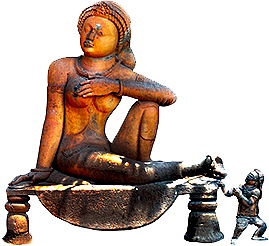
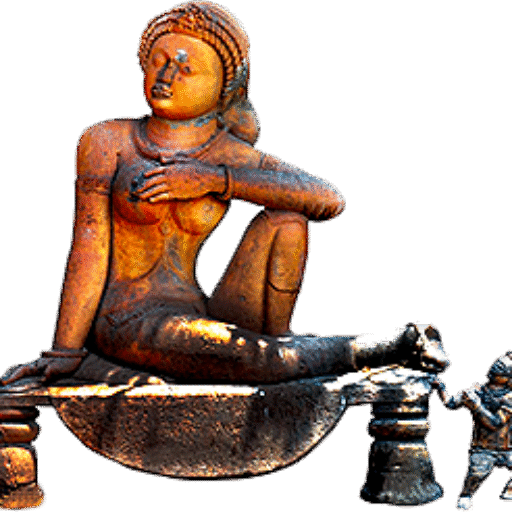
This article by Ardhendu Ray is about the main Uttarāpatha, Sanghol connected Taxila with
Mathura, Kauśāmbī, Sarnath, Pāṭaliputra and Chandraketugarh. It was a significant place where
traders, pilgrims, artists and other people from Madhyadeśa and Gandhāra, interacted.
Archaeological excavation and exploration at the site have unearthed numerous sculptures. The
present paper is an attempt to study the Kushāṇa art of Sanghol and specifically emphasizes the
female beauty frequently referred to ancient texts. The female forms reveal the perfection both
technically and in the evocation of a gentle erotic mood and charm without being vulgar, which
provoke feelings of sensuality.
6. Babur and the Persianate Influence: Shaping the political and Geographical landscape of India
Author: Hamid Amin Dar
This article by Hamid Amin Dar is the study which examines the contributions of Babur, the
Timurid prince and founder of the Mughal Empire, in propagating Persianate culture through his
literary works and imperial initiatives in India. Babur’s autobiography, Baburnama, the first of its
kind in Islamic literature, was written in Turkish yet reflected strongly Persian cultural influences.
His detailed geographical descriptions of India reveals a nuanced understanding of the region's
environment, including its climate, flora, fauna, and waterways. Drawing on his Central Asian
background, Babur contrasted India's landscape with his homeland, highlighting the necessity of
planned gardens, palaces, and water systems to mitigate the region's extreme climate. Inspired by
Persian symbols and traditions of sovereignty, these efforts, symbolized order, harmony, and divine
elements in ruler ship. Babur played a pivotal role in embedding Persian cultural values in the
Indian subcontinent, marking a significant chapter in cultural exchange and adaptation history. This
research employs an integrated framework to contextualize the Mughal Empire within the broader
Persianate world, characterized by a shared elite cultural milieu. Methodologically, it follows a
qualitative approach, engaging with both primary and secondary sources. The analysis is informed
by literary theories and historical methodologies to interpret the sources effectively and derive well
supported conclusions.
7. The Role of Rivers in the Civilizational Process of Ancient Manipur: Understanding of the Cultural Landscape
Author: Oinam Ranjita Devi and Dr. Hidam Ajit Meetei
This article by Oinam Ranjita Devi and Dr. Hidam Ajit Meetei is their present work which finds the
relationship of river management system or hydraulic management and social, political, and
economic development of early Manipur Civilization. It re-examines the role of water bodies such
as rivers, streams and lakes, which led to the emergence, and expansion of the early clan principality
and their strategic locations near these water bodies. Further, the present work studies the
construction of traditional Shoy weir or fishing traps on rivers and streams and the usage of
different canals for transportation some of which are still functional till today. By analysing these
early hydraulic management and technological systems through rivers streams and lakes of Ancient
Manipur, the paper offers critical insights into the political, social, and economic consolidation and
advancement of the civilization in Manipur throughout history. Ultimately, the work sheds light on
ancient society of Manipur as a hydraulic civilization in line with other great civilizations founded
on rivers across the globe.
8. Theoretical Framework, Professional Requisition and Significance of the 21st Century New Archaeology: Specific Revelations from the Archaeological Findings in Excavations
Author: Dr. C. B. Kamati
This article by Dr. C. B. Kamati explores the inferences of questions of cultural identity for
archaeology from innumerably divergent viewpoints. It provides a wide treatment of problems that
arise in the archaeological explorations with an academic emphasis on the growing significance of
ethnic conflicts of interests in the 21st century contemporary world. The focus on the history of
cultural identity emerged during the 19th century from romantic nationalism in Europe. It makes a
constructive effort to project the deep-rooted history of the peoples and associated nation states,
which had just been emerging as nation states liberating themselves from domestic enlightened
despotism, or imperial clutches. This invisible interest produces a set of methods and analytical and
synthetic principles, which preoccupy the craft of archaeology since then. These methods involved
the definition of ‘cultural provinces’, the analytical and synthetic principles postulate a link between
such provinces and the territories of prehistoric people. This article illustrates the nature and
scientific limits of archaeological claims to knowledge of the preceding era in different ways: the
way in which material culture relates to other aspects of cultural identity, and the significance of
changing patterns of cultural variation in the past.