Vol-11 Number- 1 January 2026 Chief Editor: Vijay Kumar Publisher: National Trust for Promotion of Knowledge, Lucknow Mode of Publication: Online (e-Journal)
1. Tapka: A Newly Discovered Rock Art Site in Sonbhadra Region, Uttar Pradesh
Author: Manisha Singh, Sarvesh Yadav, Anisha Singh, Abhay Pratap Singh, Satyam Kumar, Vikas Kumar Singh, Brij Mohan, S Chakradhari, S K Singh and Ravindra Nath Singh
They gives the
details of the painted rock shelter named Tapka in village Lauva situated 20km southeast of
Robertsganj, district Sonbhadra, India. The sandstone contains an extensive painted panel executed
in black, red ochre, and white pigments. The motifs include anthropomorphic figures, mounted
horse riders, hunting scenes, stylized animals, geometric forms, and distinctive botanical designs
rendered in line drawing style. Several microliths, including chert and chalcedony blades and blade
cores, were recovered from the shelter, indicating human activity in the area.
2. Torana Art and Architecture
Author: Amar Singh
This article by Amar Singh describes the evolution of Torana, an important element in Indian
architecture. It appears that before Mauryan period, the Toranas were made of wood with a simple
form using one or more horizontal beams as a super-structure supported on two vertical pillars.
These were usually carved with various motifs and designs. Later on, the same form and designs
were copied in stone as seen represented in Lomas Rishi cave of the Barabar hill during the Mauryan
period and at Bharhut, Sanchi, and Mathura in the Sunga-Kushana and Gupta periods. Various Indian
texts on architecture gives the following varieties of Toranas made in early and late medieval
periods: stambha-torana, patra-torana, makara-torana, chitra-torana, pushpa-torana, ratna-torana, vaktra
torana, illika-torana, hindola-torana, tilaka-torana and gajatalu-torana.
3. Sacred Transformation: Religious Influence and Socioeconomic Dynamics in Ancient and Early Medieval Kashmir
Author: Irfan Bashir and Abdul Rashid
This article by Irfan Bashir and Abdul Rashid Lone examines the profound influence of religion on
the socioeconomic landscape of ancient and early medieval Kashmir, highlighting how religious
transformations shaped social structures and economic activities. It explores the emergence of
distinct social groups, particularly the Brahmans, whose migration and religious zeal significantly
affected the region's hierarchy. Temples played a crucial role as economic hubs, receiving land
grants and providing employment, thus integrating religious, economic, and political spheres.
Pilgrimage centres promoted regional connectivity and cultural continuity, with replicated tirtha
names from across the Subcontinent fostering a pan-Indian religious landscape. The study
underscores the dynamic interplay between religion and socioeconomic development,
demonstrating how religious institutions stimulated prosperity and cultural integration in Kashmir.
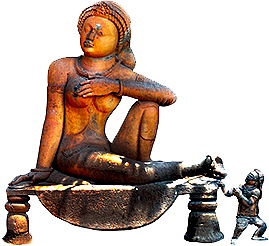
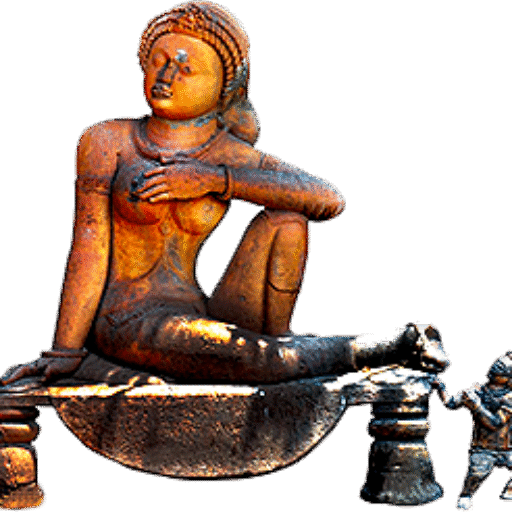
4. Metal Icons of Assam: Tracing the Sculptural Tradition
Author: Jutimala Misra and Manjil Hazarika
This article by Jutimala Misra and Manjil Hazarika explores the metal sculptural traditions in
Assam, highlighting their artistic, technological and cultural significance within the broader context
of Indian metal art. Metal sculpture, particularly made of bronze casting, represents one of the most
refined forms of ancient craftsmanship, reflecting both religious devotion and metallurgical
advancement. Assam, with its rich archaeological record, provides crucial evidence of this tradition
through discoveries such as the metal hoards from Narakasura Hill in Guwahati, which include
remarkable bronze artefacts and ritual objects. Among these, the bronze medallion and other
sculptural pieces collected from different places in Assam, preserved in the Assam State Museum
in Guwahati exemplify the region’s unique iconographic and stylistic features of the region. The
paper examines the typological, stylistic and technological aspects of these sculptures to trace their
development and regional characteristics, contributing to a deeper understanding the place of
Assam within the wider narrative of metal sculptural heritage of India.
5. Translation of Manuscript Describing the Reigns of Early Sultanate Period titled “Ahad Nama Salāṭīn-i-Ghorī wa Khilji”- Presently Kept in Rampur Raza library, district Rampur
Author: Vijay Kumar
This article by Vijay Kumar gives the translation of the manuscript titled “Ahad Nama Salāṭīn-i-Ghorī
wa Khilji” presently kept at Rampur Raza library. This was copied from the original manuscript
kept in the Royal treasury of Red Fort, Delhi. This copy was made by the order of the prince Mīrzā
Muhammad Babur (1796 – 13 February 1835), the fifth son of Akbar II, the nineteenth Mughal
emperor. This gives the portraits and details of the 14 kings from Muḥammad Ghorī to Mubārak Shāh
Khiljī.
6. Paintings of Awadh School, Company School and ivory paintings and Pencil Sketches kept in State Museum Lucknow, district Luknow
Author: Vijay Kumar & A. K. Singh
This article by Vijay Kumar & A. K. Singh gives the details of 78 painting/sketches of Awadh school,
77 paintings/sketches of company school and 21 ivory paintings presently kept in State Museum
Lucknow, district lucknow. This collection has a large number of sketches and paintings of Nawabs
of Awadh and their officials. The Awadh school of paintings is influenced by Mughal miniature
paintings. This collection also has paintings of day-to-day life of Nawabi period. It also contains the
details of day-to-day activities of Nawab Wajid Ali Shah. It also has sketches of kings and high
officials related to kingdom of Sikhs and Afgans.